


Table of Contents
- Veridian Healthcare vs YouMed: What Clinic Buyers Need to Know
- Comparison Table: Clinical-Grade Blood Pressure Monitors Side by Side
- Best Medical Diagnostic Equipment for Clinics: What Belongs on Your Shortlist
- How to Choose a Medical Device Supplier Without Getting Burned
- Long-Term Cost of Ownership: Where Clinic Budgets Actually Leak
- EHR Integration and Data Security: The Question Most Buyers Forget to Ask
- Sustainability and Device Lifecycle: Planning Beyond the First Purchase
- Conclusion: Making the Call for Your Clinic
- Frequently Asked Questions
Last Updated: October 2, 2026
Veridian Healthcare vs YouMed: What Clinic Buyers Need to Know
When clinic procurement teams ask how Veridian Healthcare and YouMed compare for sourcing high-quality medical devices for clinics, the honest answer is that brand name matters far less than the certification and validation documentation behind each device.
At Berflow Health, we distribute CE-marked diagnostic and monitoring equipment to clinics, pharmacies, and hospitals, so we see which specification sheets hold up under scrutiny.
Most clinic buyers start with the brand name on the box. That is backwards.
The device's clinical validation, calibration protocol, and integration capability decide whether it earns its place on your shelf. Brand reputation is a trailing indicator, not a leading one.
Comparison Table: Clinical-Grade Blood Pressure Monitors Side by Side
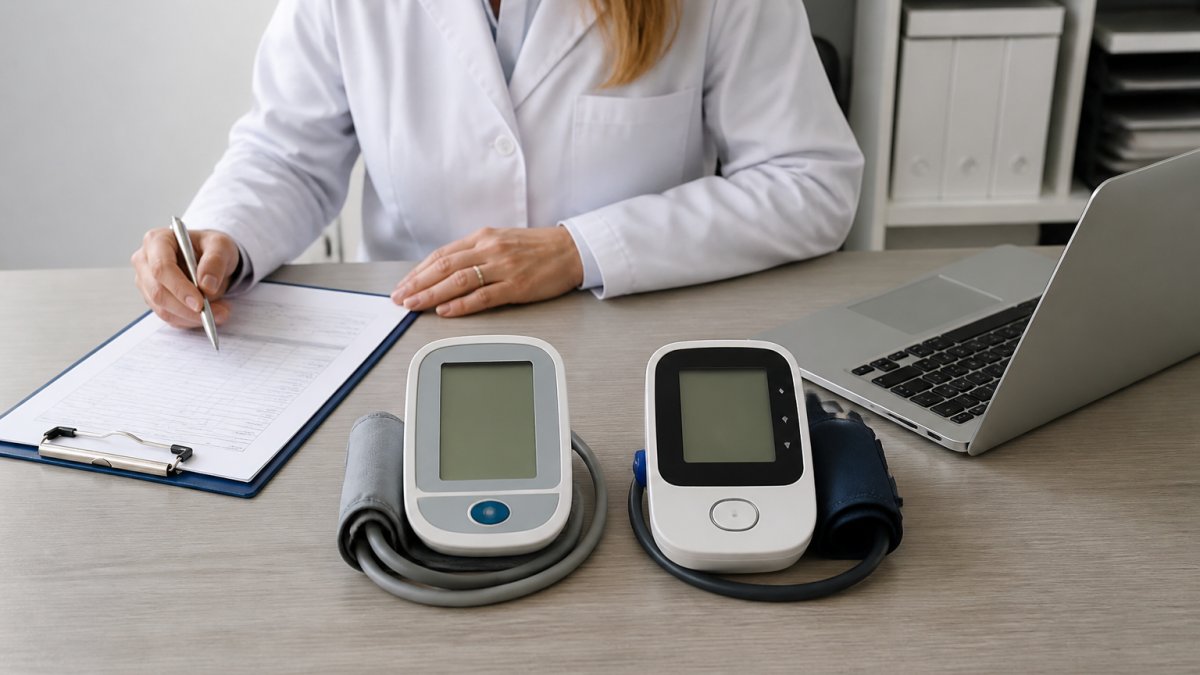
Clinical-grade blood pressure monitors differ mainly in validation standard, data handling, and intended use setting. The table below compares monitors available through Berflow Health across the specifications clinic buyers actually weigh during evaluation.
| Device | Validation | Connectivity | Best For |
|---|---|---|---|
| Clinical Automatic DBP-01HP | Pulse wave motion tolerance, clinical use | Built-in Android system | High-volume clinic intake |
| Desktop V03D | Clinical level, pulse wave inflation | Bluetooth sync, 2 users x 100 readings | Small clinics, shared use |
| A&D Medical UA-611 | ESH clinical validation | Standalone, 30-reading memory | Single-operator exam rooms |
| Wearable WBP-02A | CE approved, ESH validated | WiFi, Bluetooth, GPRS, USB | 24-hour ambulatory monitoring |
| Wireless V03 | Clinical level accuracy | Bluetooth app sync | Mobile and satellite clinics |
The DBP-01HP suits clinics processing many patients per day because its double air pump shortens inflation time and its 8-inch display supports patient education.

Best Medical Diagnostic Equipment for Clinics: What Belongs on Your Shortlist
The best medical diagnostic equipment for clinics balances diagnostic precision against workflow efficiency, not feature count. A device that produces accurate readings but disrupts patient flow will sit unused.
Start with the measurement you perform most often. Blood pressure is the highest-volume vital sign in most primary care settings, so a validated monitor is the logical first purchase.
- High-volume intake: Clinical Automatic DBP-01HP for speed and motion tolerance
- Shared exam rooms: Desktop V03D for multi-user memory and Bluetooth sync
- Ambulatory assessment: Wearable WBP-02A for 24-hour data capture
- Mobile outreach: Wireless V03 for portability and app-based records
A common mistake is buying one monitor type for every room. Match the device to the workflow instead, and your team will actually use it.

How to Choose a Medical Device Supplier Without Getting Burned
1. Regulatory clearance, not just a marketing badge. A device marketed for clinical diagnostic use should carry evidence of regulatory clearance or registration appropriate to its class.
2. Quality management certification. Look for ISO 13485 certification covering the manufacturing site, not just the brand.
3. Calibration and maintenance support. Clinical blood pressure monitors and similar diagnostic devices need periodic verification against a reference standard.
4. Warranty terms and exclusions. Ask what happens when a device fails mid-contract. A five-year warranty changes the total cost calculation significantly.
5. Supply chain reliability and lead times. This is the most overlooked check.
- FDA clearance or registration documentation provided on request
- ISO 13485 certificate covering the manufacturing site
- Calibration interval, provider, and cost stated in writing
- Warranty length and exclusions stated in writing
- Technical support response time confirmed
- Spare parts and consumables lead time quoted
- Return policy for damaged or faulty units documented
FDA device registration and listing database
Long-Term Cost of Ownership: Where Clinic Budgets Actually Leak
Total cost of ownership for clinic devices extends well beyond the purchase price. The purchase price is visible on the invoice.
Most procurement comparisons stop at the quote. Build the model instead.
1. Acquisition cost. The invoice price, plus any freight, import, or setup fees.
2. Consumables. Cuffs, sensors, tubing, and batteries recur on a predictable cadence.
Clinical Automatic Blood Pressure Monitor DBP-01HP →
3. Calibration and maintenance. Clinical diagnostic devices need periodic verification against a reference standard.
4. Downtime. Every day a device sits out of service is a day your staff works around it, and workarounds in clinical settings introduce error.
5. Training and staff time. A device with a steep learning curve consumes staff hours you never budgeted for.
EHR Integration and Data Security: The Question Most Buyers Forget to Ask
Integration with Electronic Health Records (EHR) determines whether your device data reaches the patient chart automatically or lands in a paper log. This is the gap most clinic buyers discover too late.
Devices that sync readings to a main system in real time reduce transcription errors and save staff time. The Desktop V03D syncs data via Bluetooth, and the Wireless V03 supports app-based record keeping, which helps clinics move readings into their records without manual entry.
Data security matters just as much. Any device transmitting patient data should be evaluated against your clinic's HIPAA compliance obligations, particularly around how readings are stored and who can access them. Confirm with the supplier how data is encrypted in transit and at rest.
If your clinic runs on a records system that requires specific data formats, ask before purchase. Retrofitting integration after the fact costs far more than choosing a compatible device up front.
Sustainability and Device Lifecycle: Planning Beyond the First Purchase
Device longevity and end-of-life planning are sustainability questions as much as budget questions.
Build longevity into the buying decision. Rechargeable lithium batteries, like those in the V03D and WBP-02A, cut disposable battery waste across the equipment lifecycle. Durable cuffs and repairable housings extend device life further.
Standardization helps too. When a clinic runs one or two device models instead of six, spare parts inventory shrinks, training simplifies, and biomedical engineering has fewer variables to track.
Ask suppliers about take-back or recycling options at end of life. It is a small question that signals whether a supplier thinks past the sale.
Conclusion: Making the Call for Your Clinic
The Veridian Healthcare and YouMed comparison question usually resolves into a simpler one: which device carries the validation, warranty, and support your clinic can defend. Answer that, and the brand name stops mattering.
Berflow Health supplies CE-marked diagnostic equipment built for exactly this decision, including the Clinical Automatic DBP-01HP for high-volume intake and the Wearable WBP-02A for ambulatory monitoring. Every device ships with documented certification and technical support behind it.

Get started with Berflow Health and equip your clinic with monitoring tools you can validate, maintain, and trust.
Frequently Asked Questions
What are the primary differences between Veridian Healthcare and YouMed product lines for clinics?
Veridian Healthcare and YouMed both supply clinical and home diagnostic devices, but their catalogs differ in depth. Veridian Healthcare leans toward consumer-accessible thermometers, blood pressure cuffs, and first-aid items, while YouMed focuses more on professional monitoring tools. For clinics that need verified clinical-grade blood pressure monitors, the deciding factor is not the brand name but whether the specific model carries regulatory validation and documented calibration accuracy. Ask each supplier for the device's regulatory paperwork before you compare price.
Are Veridian Healthcare devices FDA-cleared for clinical use?
Regulatory clearance applies to specific device models, not to a brand as a whole. A company can hold clearance for one blood pressure monitor and not another. Before purchasing any medical devices for clinics, request the clearance documentation for the exact model you plan to buy. If a supplier cannot produce that documentation, treat the device as consumer-grade and price it accordingly. This check takes minutes and prevents a compliance headache later.
How do I choose a medical device supplier I can rely on long term?
Start with four checks: regulatory documentation for each model, warranty terms in writing, lead times for restocking, and whether the supplier offers calibration or preventative maintenance support. Ask for the average turnaround on a replacement unit and confirm who pays return shipping on a defective device. A supplier that answers these questions in writing is a safer bet than one that only quotes a low unit price. Supply chain logistics matter as much as the device itself when your clinic cannot afford downtime.
Do Veridian Healthcare and YouMed offer bulk procurement options for hospitals?
Bulk pricing structures vary by supplier and are usually negotiated rather than published. When evaluating medical devices for clinics at volume, ask for tiered pricing at 10, 50, and 100 units, plus the minimum order quantity for each tier. Also confirm whether bulk orders include extended warranty coverage or onboarding support. Group purchasing organizations can sometimes secure better terms, so compare a GPO quote against a direct order before committing to a multi-unit purchase.
What should clinics look for when sourcing diagnostic monitoring tools?
Prioritize clinical validation, calibration accuracy, and interoperability over feature count. Confirm the device is validated to a recognized standard, check the stated measurement tolerance, and verify whether it exports data in a format your EHR can read. Then look at the equipment lifecycle: battery type, cuff replacement cost, and how often the manufacturer recommends recalibration. A monitor that saves $40 upfront but needs a $90 cuff every year costs more over five years.
