


Table of Contents
- What a Pulse Oximeter Measures and How It Works
- Understanding the Two Numbers: SpO2 and Pulse Rate
- Normal SpO2 Range for Adults and What It Indicates
- How to Get an Accurate Reading
- Factors Affecting Pulse Oximeter Accuracy
- When to Seek Medical Attention for Low Oxygen
- Common Mistakes to Avoid When Reading Your Oximeter
- Conclusion
Last Updated: August 15, 2026
What a Pulse Oximeter Measures and How It Works
A pulse oximeter measures oxygen saturation in your blood and heart rate without drawing blood. It works by shining red and infrared light through your fingertip. Oxygenated and deoxygenated hemoglobin absorb different amounts of each wavelength, allowing the device to calculate your oxygen saturation percentage and pulse rate in seconds using photoplethysmography.
Motion artifact (movement), poor perfusion (weak blood flow), and nail polish can interfere with accuracy. At Berflow Health, we supply clinical-grade pulse oximeters like the G1B Pulse Oximeter and FINICARE FINGERTIP PULSE OXIMETER YM212 designed to minimize interference while delivering reliable readings in home and clinical settings.


Understanding the Two Numbers: SpO2 and Pulse Rate
Every pulse oximeter displays two critical numbers: SpO2 and pulse rate in beats per minute. SpO2 represents the percentage of hemoglobin saturated with oxygen, while pulse rate shows heartbeats per minute.
What SpO2 Means
SpO2 (peripheral oxygen saturation) measures the percentage of oxygen-carrying hemoglobin in your blood. A reading of 95% means 95% of hemoglobin molecules carry oxygen. Normal SpO2 for healthy adults ranges from 95% to 100%. Readings between 90% and 94% are considered low but not immediately dangerous for most people. Context matters, someone with chronic lung disease might function normally at 88% SpO2, while a sudden drop to 90% in a previously healthy person could signal a problem.
Low SpO2 indicates your lungs, heart, or blood struggle to deliver oxygen to tissues, making it a useful screening tool: abnormal readings almost always signal a problem deserving investigation.
What Pulse Rate (BPM) Means
Pulse rate, measured in beats per minute (BPM), shows how many times your heart contracts each minute. Normal resting pulse for adults ranges from 60 to 100 BPM, though athletes may have rates in the 40s. Above 100 BPM is tachycardia; below 60 BPM is bradycardia.
The pulse rate on your oximeter serves as an accuracy check. If the oximeter reads 72 BPM but your manual count shows 65 BPM, the reading may be unreliable. Low SpO2 with rapid pulse suggests your body compensates for insufficient oxygen, while low SpO2 with normal or slow pulse might indicate medication effects or neurological issues.
Normal SpO2 Range for Adults and What It Indicates
The normal SpO2 range for adults at sea level is 95% to 100%. Readings between 90% and 94% are considered low and warrant investigation, especially at rest. Low SpO2 can indicate hypoxemia from temporary causes like respiratory infection or chronic conditions like asthma, COPD, heart disease, or sleep apnea.
Readings below 90% are concerning and typically require medical attention. SpO2 below 90% indicates hypoxia (tissue-level oxygen deprivation), where your organs may not receive adequate oxygen. Context shapes interpretation, someone with COPD might have a baseline SpO2 of 88-92%, which is normal for them. Establishing your personal baseline with your healthcare provider is important.
How to Get an Accurate Reading
Accurate readings depend on proper technique. Small mistakes produce false low readings causing unnecessary worry.
Step 1: Prepare Your Hand and Finger
Wash your hands with soap and warm water, then dry completely. Remove nail polish, especially dark colors like black, blue, or dark red, which absorb red light and cause falsely low readings. Ensure your finger is warm with good color, cold fingers have poor blood flow, weakening the signal. If fingers are cold, rub your hands together or hold them under warm running water for a minute.
Step 2: Position the Device Correctly
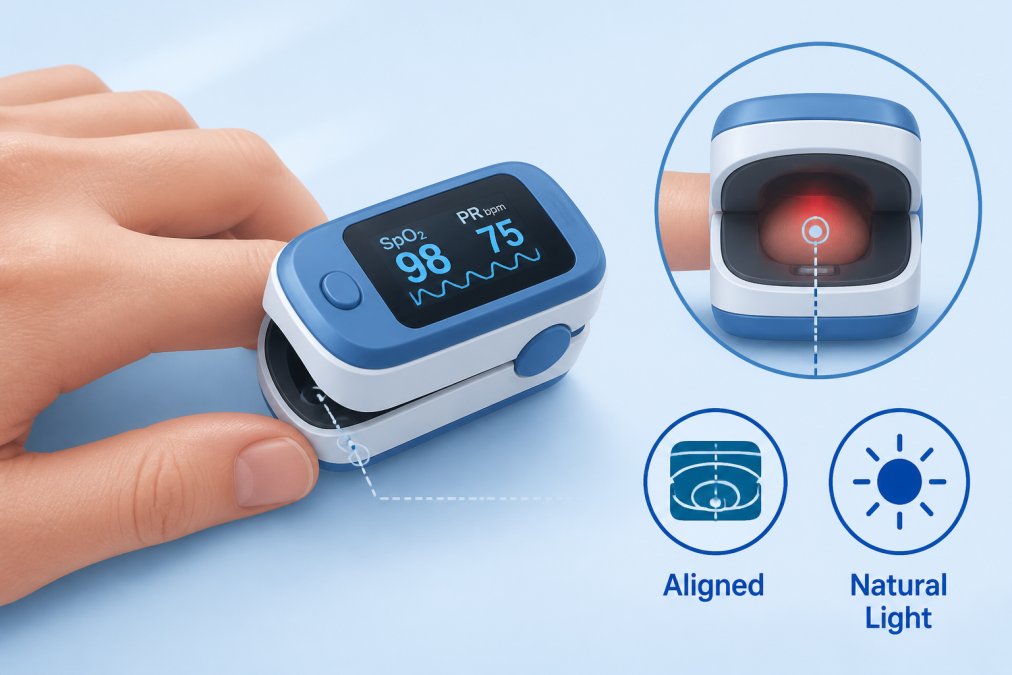
Insert your finger into the clip so the sensor window sits directly on the fleshy fingertip pad, not on the nail or finger side. The clip should be snug but not tight, you should slide a thin piece of paper between your finger and clip. Ensure no part presses on the finger side; pressure should distribute evenly across the fingertip pad.
Step 3: Keep Still and Wait for Stabilization
Keep your hand still and relaxed once positioned. Movement creates motion artifact, causing inaccurate readings. Rest your hand on a table or in your lap without arm support. Wait 10-15 seconds after placing the device before noting the reading. You'll know the reading is stable when numbers stop changing and the waveform appears smooth and regular.
Factors Affecting Pulse Oximeter Accuracy
Skin tone and pigmentation significantly affect accuracy. Pulse oximeters were originally calibrated on lighter skin tones, and studies show readings are less accurate on darker skin. If you have darker skin and receive SpO2 readings in the 92-95% range, consider verification with an arterial blood gas test or clinical oximeter using different technology.
Peripheral perfusion (blood flow to fingertips) directly affects signal quality. Cold hands, low blood pressure, severe anemia, or poor circulation reduce perfusion. Warm your fingers before taking readings if they're pale or cold.
Nail polish and artificial nails absorb light, particularly red light. Remove polish from the test finger or use a different finger without polish.
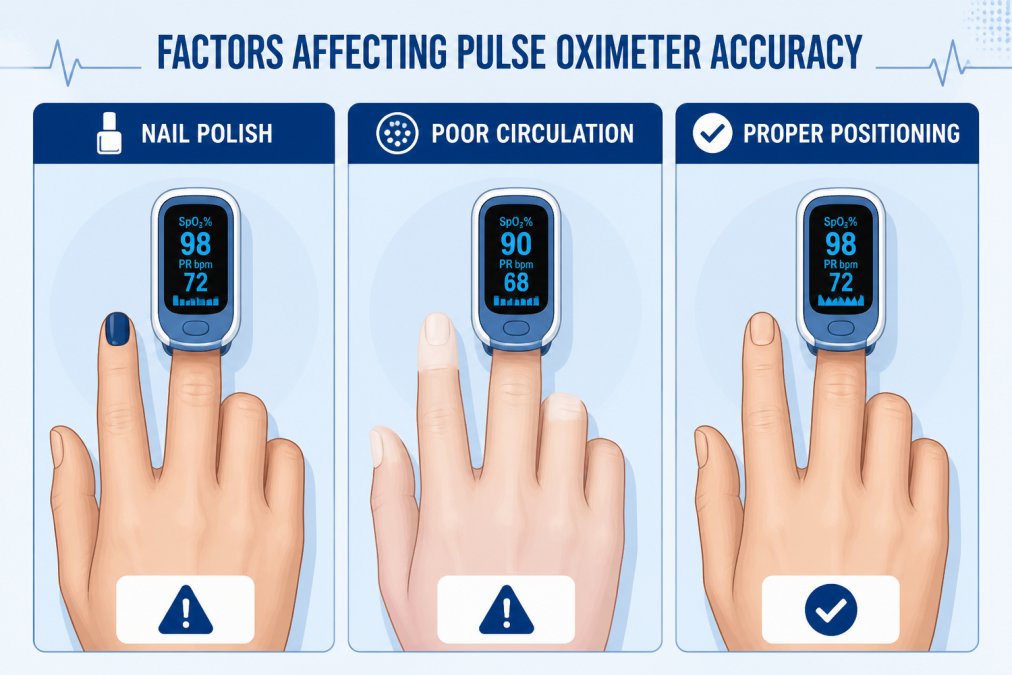
Motion artifact occurs when your finger or hand moves during measurement. Tremors from anxiety or Parkinson's disease create motion artifact. Stabilize your hand on a table or ask someone to help hold it still.
Ambient light can interfere with some oximeters, particularly in bright sunlight. Move to a dimly lit area if getting inconsistent readings in bright light.
Hemoglobin levels affect oxygen-carrying capacity. Severe anemia can produce falsely high SpO2 readings; polycythemia can produce falsely low readings.
Carbon monoxide poisoning produces falsely high SpO2 readings because carboxyhemoglobin absorbs light similarly to oxyhemoglobin. If you suspect exposure, seek emergency care immediately.
Altitude affects SpO2 naturally. At 5,000 feet, normal SpO2 might be 92-95%. At 10,000 feet or higher, normal SpO2 drops further.
Medications and medical conditions affect both actual oxygen levels and oximeter readings. Establish your baseline SpO2 with your healthcare provider so you know what's normal for you.
When to Seek Medical Attention for Low Oxygen
Knowing when low SpO2 warrants medical attention requires understanding both the number and your symptoms.
Seek immediate emergency care (call 911) if you have:
- SpO2 below 90% with chest pain, severe shortness of breath, confusion, or loss of consciousness
- Any SpO2 reading with severe respiratory distress symptoms (gasping, inability to speak in full sentences, blue lips or fingertips)
- A sudden SpO2 drop from your baseline, even if the absolute number seems acceptable
Contact your doctor urgently (same day) if:
- SpO2 consistently reads 90-94% over multiple proper readings
- SpO2 drops below 95% with symptoms like mild shortness of breath, fatigue, or new cough
- You have a chronic lung condition and your SpO2 is lower than your established baseline
Monitor and follow up if:
- SpO2 reads 95-100% with no symptoms
- A single low reading normalizes on repeat measurement with proper technique
- Your SpO2 is slightly low but you feel fine with no other symptoms
Context matters significantly. A SpO2 of 92% in someone with COPD who feels fine might be their baseline requiring no action. The same reading in a previously healthy person with acute respiratory infection symptoms requires medical evaluation.
Common Mistakes to Avoid When Reading Your Oximeter
Mistake 1: Taking readings immediately after activity. Your heart rate and oxygen demand spike during exercise. Wait 5-10 minutes after activity before taking readings if establishing baseline SpO2.
Mistake 2: Ignoring finger position and clip pressure. The most common cause of false low readings is improper positioning. Check positioning and clip pressure if consistently getting readings 3-5% lower than expected.
Mistake 3: Relying on a single reading. Take at least two readings, preferably three, and note the pattern. Consistent readings in the same range reflect your actual SpO2; wildly varying readings indicate technique needs improvement.
Mistake 4: Not establishing your personal baseline. Ask your healthcare provider what your baseline should be, especially with chronic conditions. Once you know your baseline, you'll recognize actual changes rather than panicking over readings normal for you.
Mistake 5: Forgetting to remove nail polish. Dark nail polish is one of the most common causes of falsely low readings. Remove polish from the test finger or use a different finger without polish.
Mistake 6: Taking readings on cold fingers. Always warm your hands before measuring. This is especially important in winter or if you have Raynaud's syndrome.
Mistake 7: Moving or talking during measurement. Keep your hand completely still and avoid talking or tensing muscles. If you have tremors, stabilize your hand on a table or ask someone to help.
Mistake 8: Not giving the device enough time to stabilize. Wait 10-15 seconds and watch for the reading to stop changing before recording. Flickering or jumping readings are still stabilizing and unreliable.
Mistake 9: Using a device with low batteries. A pulse oximeter running on low batteries may produce inaccurate values. Try new batteries if readings seem inconsistent or unusually low.
Mistake 10: Comparing readings from different devices. Different oximeter models may produce slightly different readings due to sensor and algorithm differences. For monitoring specific conditions, use the same device consistently to track trends accurately.
Accurate pulse oximeter readings depend on understanding what the numbers mean and using proper technique. Your SpO2 tells you what percentage of hemoglobin carries oxygen, while pulse rate shows heartbeats per minute. Normal SpO2 for adults ranges from 95% to 100%, though individual baselines vary. Accurate readings require clean hands, correct finger positioning, stillness during measurement, and waiting for device stabilization.
Many factors affect accuracy, from nail polish and cold hands to skin tone and medications. Recognizing these factors helps troubleshoot when readings seem wrong. Most importantly, know when to seek medical attention. SpO2 below 90% with symptoms like chest pain or severe shortness of breath requires immediate emergency care. Consistently low readings between 90-94% warrant a doctor's call.
At Berflow Health, we understand that reliable pulse oximeter readings are essential for managing your health at home. Our clinical-grade devices like the G1B Pulse Oximeter, FINICARE FINGERTIP PULSE OXIMETER YM212, and G2C Desktop Oximeter deliver accurate, consistent readings across diverse populations and conditions. Whether monitoring a chronic condition or checking oxygen levels at home, Berflow Health provides professional-grade diagnostic tools to track vital signs with confidence and precision.

| Factor | Impact on Accuracy | How to Address |
|---|---|---|
| Nail polish | Falsely lowers SpO2 reading | Remove polish before measurement |
| Cold hands | Weakens signal, unreliable reading | Warm hands under warm water first |
| Motion during reading | Creates false fluctuations | Keep hand still on table |
| Improper finger positioning | Reduces signal quality | Position sensor on fingertip pad, not nail |
| Tight clip pressure | Restricts blood flow | Ensure clip is snug but not tight |
| Ambient light | Interferes with sensor | Move to dimly lit area |
| Device with low batteries | Produces inaccurate values | Replace batteries regularly |
Frequently Asked Questions
What is a normal pulse oximeter reading?
A normal SpO2 reading for adults at sea level is 95-100%. Readings between 92-94% are generally acceptable for most people, though those with chronic lung conditions may have lower baseline readings. Anything below 92% warrants attention. Your pulse rate should fall between 60-100 beats per minute at rest. If your reading consistently falls outside these ranges, consult your healthcare provider.
What do the two numbers on a pulse oximeter mean?
The first number is your SpO2 level, which measures the percentage of oxygen in your hemoglobin. The second number is your pulse rate in beats per minute (BPM). For example, a reading of 98/72 means 98% oxygen saturation and a heart rate of 72 BPM. Both numbers provide important information about your respiratory and cardiovascular health.
Can nail polish or skin tone affect pulse oximeter readings?
Yes, both can impact accuracy. Dark nail polish, artificial nails, and thick nail beds can block light absorption and produce inaccurate readings. Additionally, research shows that pulse oximeters may be less accurate on individuals with darker skin tones due to how the device's infrared and red light sensors interact with melanin. If you have these factors, clean the nail first or use a different finger without polish.
When should I be concerned about my SpO2 levels?
Seek immediate medical attention if your SpO2 drops below 90% or if you experience shortness of breath, chest pain, confusion, or bluish lips or fingertips. SpO2 between 92-94% may be acceptable during sleep but warrants daytime investigation. If you have a chronic condition like COPD or asthma, your doctor may set a different threshold. Contact your healthcare provider if readings remain consistently below 95% or if you notice sudden drops.
[EXTERNAL_LINK: FDA guidance on pulse oximeter accuracy and limitations | fda.gov]
[EXTERNAL_LINK: American Lung Association information on oxygen saturation and hypoxemia | lung.org]
[EXTERNAL_LINK: Research on pulse oximeter accuracy disparities across skin tones | nejm.org]
This article was written using GrandRanker

